
Building trust and continuity through our Arthritis Follow-up Session at Positive Network
Our Clinical Research Facility (CRF) returned to Positive Network for an arthritis follow-up session, continuing our commitment to building long-term relationships with community partners and making research more accessible, inclusive and meaningful.
The session followed earlier conversations with Positive Network members, who had expressed a strong interest in learning more about arthritis, research opportunities, and how people from their community could take part in studies. In response, the CRF team worked with clinical colleagues and community partners to develop a follow-up session focused on listening, learning and answering questions in an informal and welcoming environment.
Professor Nidhi Sofat, Consultant in Rheumatology opened the session with an engaging conversational Q&A. Members were able to ask questions about arthritis, symptoms, treatment, and research, with Professor Sofat ensuring that everyone who wanted to contribute had the opportunity to do so. She also posed questions back to the group, making the session interactive, lively and enjoyable.
Following a short break, Dr Katie Feather, Academic Clinical Fellow in Rheumatology / Internal Medical Trainee delivered a compelling presentation on arthritis research studies. She explained the purpose of the research, what participation may involve, and why it is important for people from different communities to have the opportunity to take part. Members were able to ask further questions and share their reflections during an open discussion.
Reverend Pauline Dawkins, our Trust Chaplain and also our CRF Peer Researcher, and Thasmiya Khaja Israr, Research Coordinator also spoke with members about study participation, and how potential participants could be supported to attend the Clinical Research Facility. This included discussion about practical barriers, trust, communication, and the importance of making research feel approachable and relevant to the communities we serve.
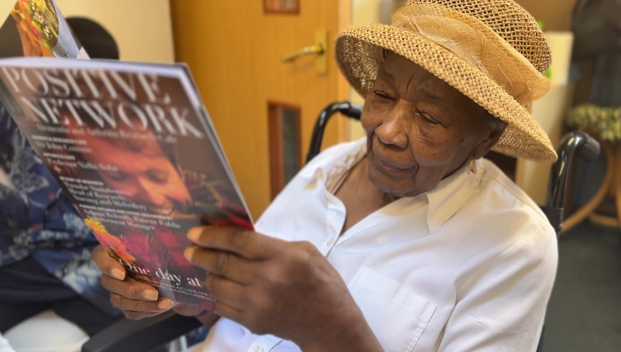
As part of the session, the CRF team also gifted Positive Network members roving microphones and copies of the Dementia and Arthritis Research Café magazine. These were provided in response to feedback from members, who felt that microphones would support better participation during group discussions, and that written materials would help reinforce the information shared during sessions.
The follow-up session highlighted the value of going back to communities, listening to what matters to them, and building continuity beyond one-off engagement events. Members expressed interest in taking part in arthritis research and welcomed the opportunity to have open, honest conversations with researchers and clinical staff.
We would like to thank Positive Network for their continued partnership, Professor Sofat and Dr Feather for their time and expertise, Reverend Pauline Dawkins for her ongoing support, and all members who contributed so openly to the discussion.
This session is another important step in our wider Patient Public Involvement (PPI) work to strengthen trust, improve awareness of research, and support more inclusive participation in clinical studies across South West London.