
The NIHR St George’s Clinical Research Facility joined patients, members of the public, clinicians and researchers at the Trust’s Let’s Talk Red Cell Research Café, creating an open and welcoming space to talk about research into sickle cell disease and other red cell conditions.
The event was organised by Dr Stephen McIntyre, Clinical Psychologist with the Red Cell Pain Management & Psychology Service at St George’s University Hospitals NHS Foundation Trust and it was also sponsored by our Trust’s charity.
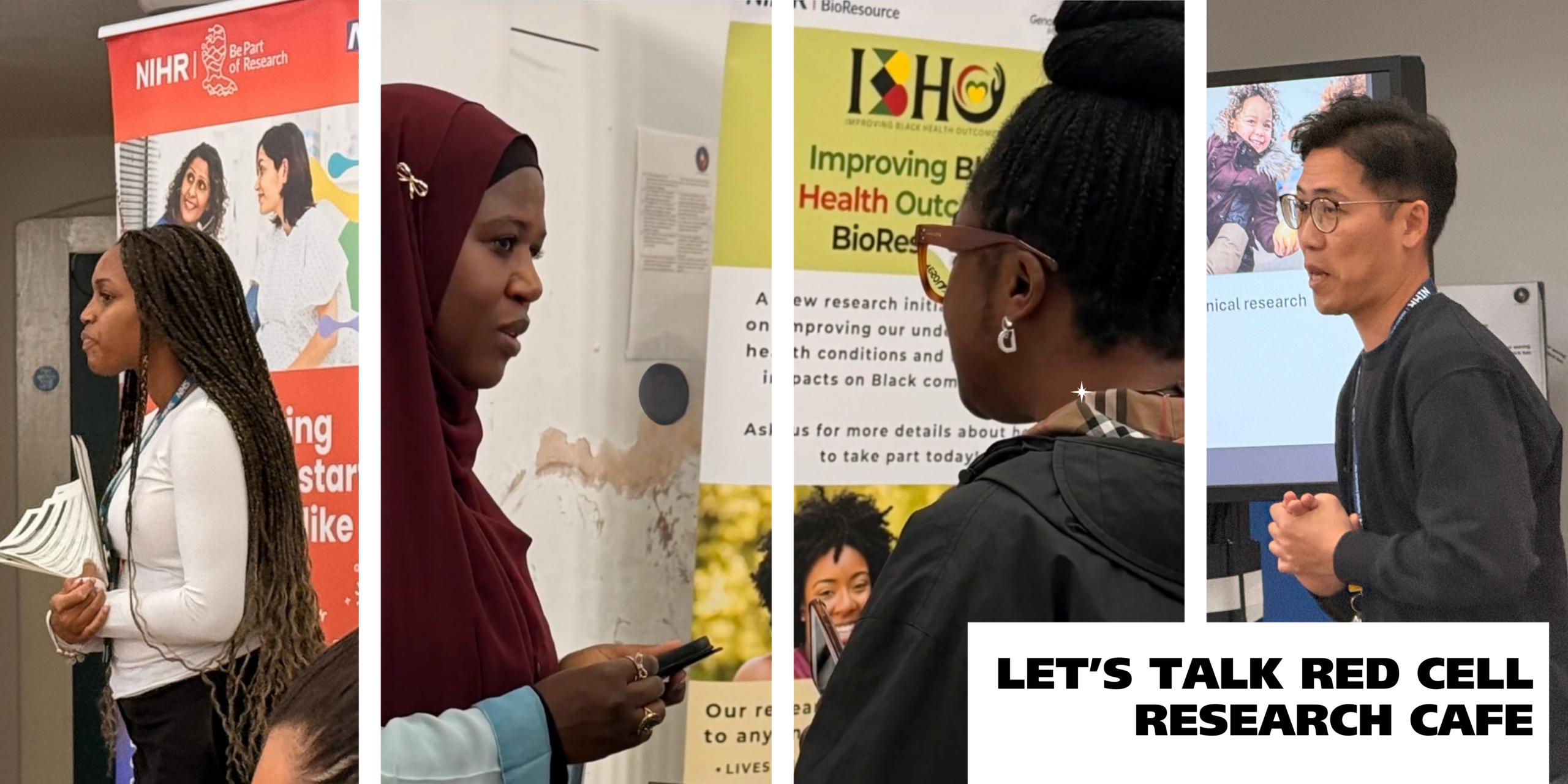
The programme brought together lived experience, research presentations, interactive discussions and opportunities for attendees to speak directly with research teams. Topics included current research relating to sickle cell disease, transplantation, small vessel changes and Improving Black Health Outcomes (IBHO).
Our Haematology Research team, led by Ka King and Maria, contributed to the event, presenting and speaking with attendees at the CRF research stall about IBHO and opportunities to support and participate in research. There was particular interest in research relating to sickle cell disease and thalassaemia, with attendees able to ask questions directly and find out more about how research is being carried out at St George’s.
The Generation Study was also represented by Valentina Elkemi, who spoke with attendees about the national study and opportunities for families to learn more and take part.
The CRF stall remained busy throughout the event, providing an informal space where people could explore research information, speak directly with staff and discuss some of the questions and concerns they may have about participating in research.
The Research Café format also placed lived experience at the heart of the day. Alongside research presentations, attendees took part in an interactive Q&A and small-group discussion tables, helping researchers hear directly about the issues that matter to people living with red cell conditions.
Events such as this form an important part of our commitment to making research more accessible, inclusive and relevant to the communities we serve. By bringing researchers and communities together in a conversational setting, we can increase awareness of research opportunities while also listening and learning from the people research is intended to benefit.