
Patients, Public and Researchers Come Together at September PPIEP Meeting
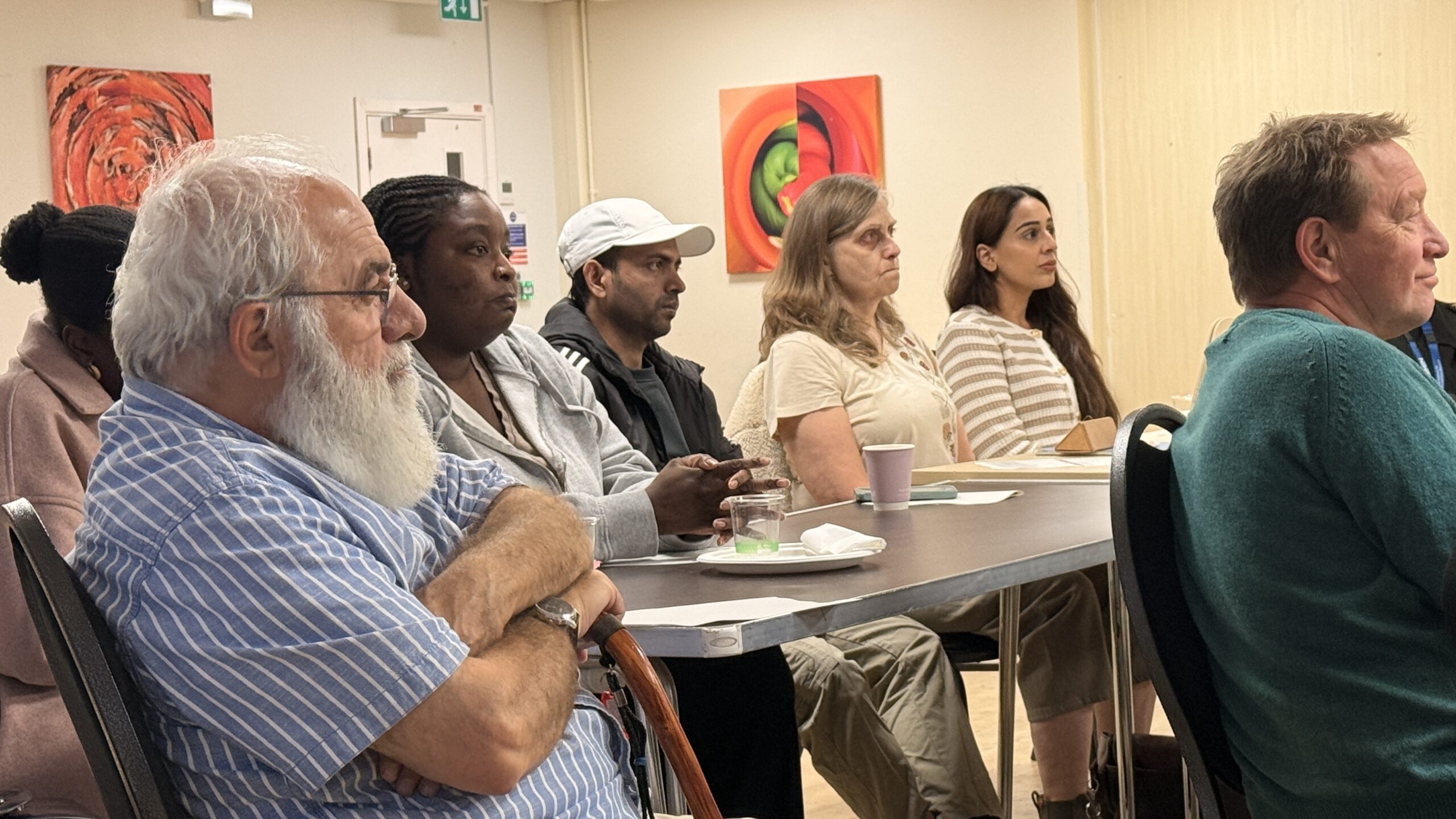
Patients, public contributors, clinicians and researchers came together at the September PPIEP Steering Group meeting for a lively evening of research updates, questions and discussion about how to make research more inclusive and accessible.
The meeting highlighted work taking place across St George’s while giving members the chance to challenge researchers, share lived experience and suggest practical ways of taking research beyond the hospital and into local communities.
Members heard about current and forthcoming kidney and prostate cancer studies, including plans for the PEREGRINE trial and prostate cancer research such as ELIPSE, STAMPEDE 3 and PART.
PART will investigate focal therapy for men with intermediate-risk prostate cancer, treating only the affected area rather than the whole prostate, with the aim of maintaining cancer control while reducing treatment side effects. The discussion covered genetics, recurrence, artificial intelligence, screening, lifestyle and the importance of ensuring that research reaches Black African and Black Caribbean men, who are disproportionately affected by prostate cancer.
Dr Catherine Cosgrove, CRF and Vaccine Institute Co-Director and Consultant in Infectious Diseases and Acute Medicine, updated members on studies involving COVID-19 and flu vaccination, pneumococcal disease, bird flu, norovirus, RSV and human metapneumovirus.
She also thanked PPIEP members who had reviewed patient-facing research information, helping make study materials clearer and more accessible. Discussion focused strongly on how research is delivered. Feedback from parents has led to home visits in some maternal studies, while young people have encouraged researchers to take studies into schools.
Members also discussed opportunities to take research into care homes, sheltered housing and other community settings, particularly for older people or those who may struggle to travel to hospital.
Clinical Research Fellow Belinda Eze introduced the AURA early phase respiratory trial and explained what participation would involve, including nebulised treatment at home, clinic visits, breathing tests, questionnaires and follow-up. The discussion considered treatment tolerability and the practical burden of taking part, helping members look at the study from the participant’s perspective as well as the clinical one.
The evening also put PPIEP members centre stage. Fatima Sanneh spoke about how research involvement had inspired her studies and ambition to become a midwife. She has also become an active community ambassador, helping encourage two new people to join PPIEP following the recent Let’s Talk Red Cell Research Café.
Matthew Clarke shared his work on community health talks, prevention and co-creation, and introduced his HealthSat Nav initiative. Andrew Freeman spoke about his experience of Type 1 diabetes, kidney failure, dialysis and a kidney and pancreas transplant, and how this led him into kidney research, peer support and community awareness.
Their presentations showed the depth of lived experience, professional knowledge and community connections PPIEP members bring to research.
PPIEP Manager Adama Roberts also updated members on recent engagement activity, including the Red Cell Research Café, the arthritis follow-up session, the newly launched CRF website and forthcoming staff and PPIEP spotlights.
A key message from the evening was that research involvement can take many forms. People can review study information, share experiences, ask questions, help improve communications and connect researchers with communities without necessarily joining a clinical trial.
The meeting closed with thanks from Tinashe Samakomva, Group Associate Director of Nursing for Research Workforce, who emphasised the importance of patient and public partners in shaping how research is designed and delivered.
The September meeting reinforced a simple message: inclusive research is not only about increasing participation but also about listening, removing barriers and working with communities to make research more relevant, accessible and representative.