
CRF research stall sparks conversations about trust, inclusion and getting involved
Our NIHR St George’s Clinical Research Facility (CRF) team spent the day in the Grosvenor Wing at St George’s Hospital, talking with staff, patients, visitors and students about research, the work of the National Institute for Health and Care Research (NIHR), and the different ways people can get involved.
Colleagues from the Vaccine Institute joined us at the stall to talk about their COVID-19 and Flu Combination Study, while the CRF team highlighted opportunities including the Improving Black Health Outcomes (IBHO) BioResource and our Patient and Public Involvement, Engagement and Participation (PPIEP) programme.
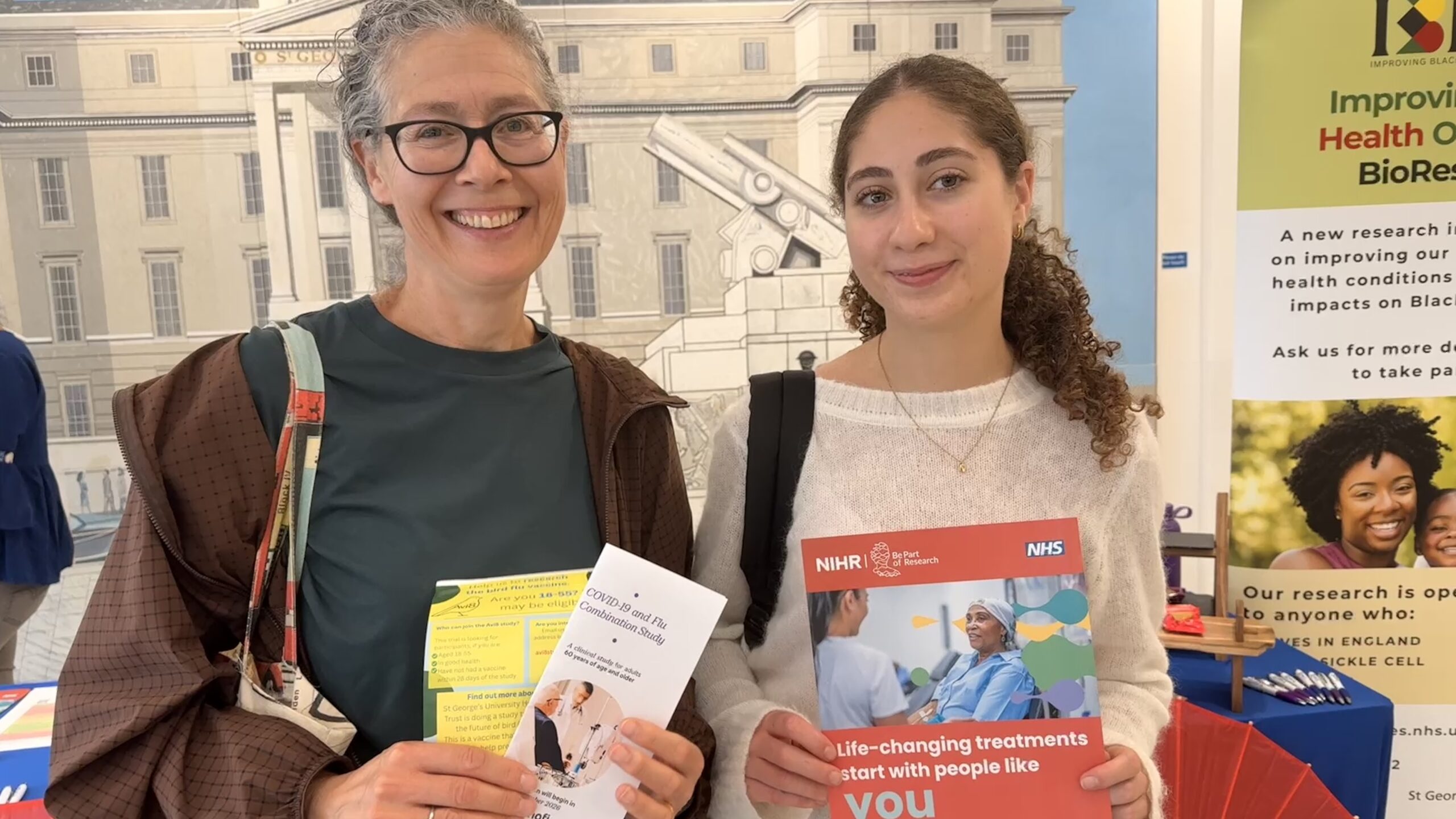
The stall generated lots of interest in our studies, but some of the most valuable conversations were about trust in research.
Several people spoke openly about scepticism around vaccines, particularly within some underserved communities. Rather than simply providing information, our team took time to listen to people’s concerns, discuss why representation in research matters and explain that taking part in research does not always mean joining a clinical trial or receiving a treatment.
We explained how members of the public can help shape research by reviewing participant information, commenting on study designs, helping researchers make information more accessible and advising on how studies can better reach different communities.
One example we shared was the work of our PPIEP Steering Group, whose members have helped review and provide feedback on the development of the CRF’s newly launched website. Their involvement has helped us think carefully about whether our information is clear, accessible and useful to patients and the wider public.
These conversations appeared to resonate with several visitors. Some took away information about our PPIEP programme and said they would consider joining the group and contributing their experiences and perspectives to future research.
We were also delighted to receive interest from university students keen to become more involved in research through PPIEP. Their enthusiasm provided another opportunity to explain that patient and public contributors are valued for the time, knowledge and lived experience they bring and, where appropriate, can receive payment for their involvement in line with relevant guidance.
The day also opened up wider conversations about how research could connect more closely with primary care and local communities. We spoke with a GP working within a diverse practice partnership in Wandsworth about opportunities to strengthen links between hospital research, general practice and the communities they serve.
With more healthcare increasingly being delivered closer to home, conversations such as these are important in helping us explore how research opportunities can reach people beyond the hospital setting and become more representative of our local population.
The event demonstrated the value of being visible and accessible within the hospital. By creating space for informal conversations, people were able to ask questions, raise concerns and learn that there are many different ways to contribute to research.
For our CRF, inclusive research starts with listening. Every conversation helps us better understand the communities we serve and how we can work with them to make research more accessible, relevant and representative.